We're excited to share the key resourse from the 2025 HPCSIM conference: the talk slides is now online for free, please fill the form to access them.
The focus of this event is exploring the most recent methodologies available to accelerate simulation software on massively parallel platforms providing to researchers as well as practitioners a survey of the potentiality of HPC in real world applications.
The demand for accurate and reliable numerical simulations of complex phenomena is increasing exponentially across a broad range of scientific and engineering applications. Problems like modeling fractal formation in macroscopic elasto-plasticity, simulation of biological systems, flow and transport in fractured formations are extremely challenging and require specific knowledge to be addressed.
Moreover, modeling becomes even more expensive when several different configurations or scenarios must be considered or when the object of the analysis must be optimized according to some criteria.
In addition, Machine and Deep Learning approaches (such as PINN, Deep Learning ROM, Auto-encoders just to name a few examples) are beginning to play an important role in advancing scientific discovery in several engineering domains, traditionally dominated by the numerical solution of PDEs.
To address the request for larger simulations, involving billions of unknowns, the development of novel and technology-aware algorithms able to exploit modern HPC systems is of paramount importance.

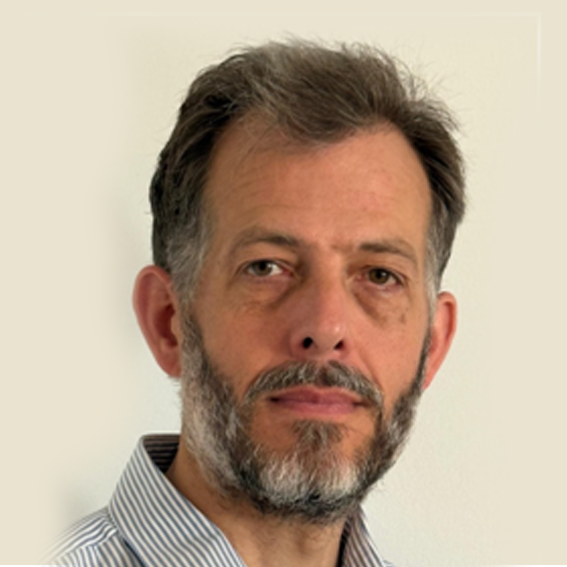
Matthew Szyndel is the HPC Numerics Discipline Manager for reservoir simulation at SLB. He has been working on numerical simulation since his PhD in theoretical particle physics in the 1990s.
He has worked for the UK Met Office, the European Centre for Medium-Range Weather Forecasts and since 2007 for SLB, simulating multi-phase flow in porous media. As the Reservoir Simulation HPC-Numerics Discipline lead, Matthew is responsible for making sure that the Intersect Reservoir Simulator performs competitively.
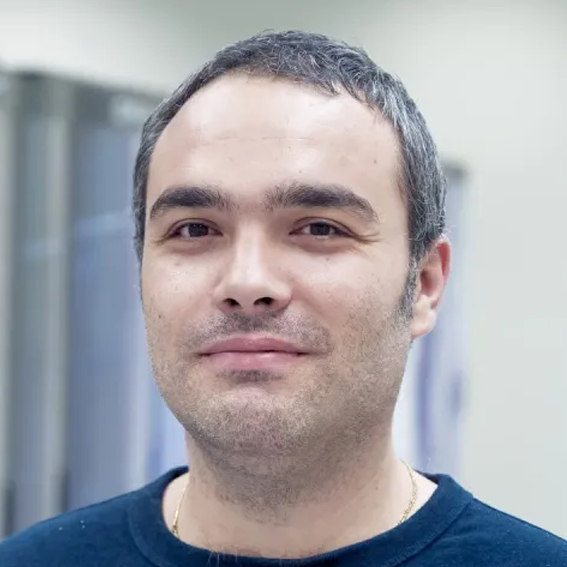
His research focuses on the design and implementation of algorithms and numerical software for the solution of large-scale nonlinear systems of equations and optimization problems.
He is a developer of the Portable and Extensible Toolkit for Scientific Computations (PETSc), a contributor to many open-source software packages for finite element simulations, including MFEM, deal.II and NGSolve, and a member of the High-Performance Computing Technical Committee for the OpenFOAM project.
An agenda full of interesting speeches!